


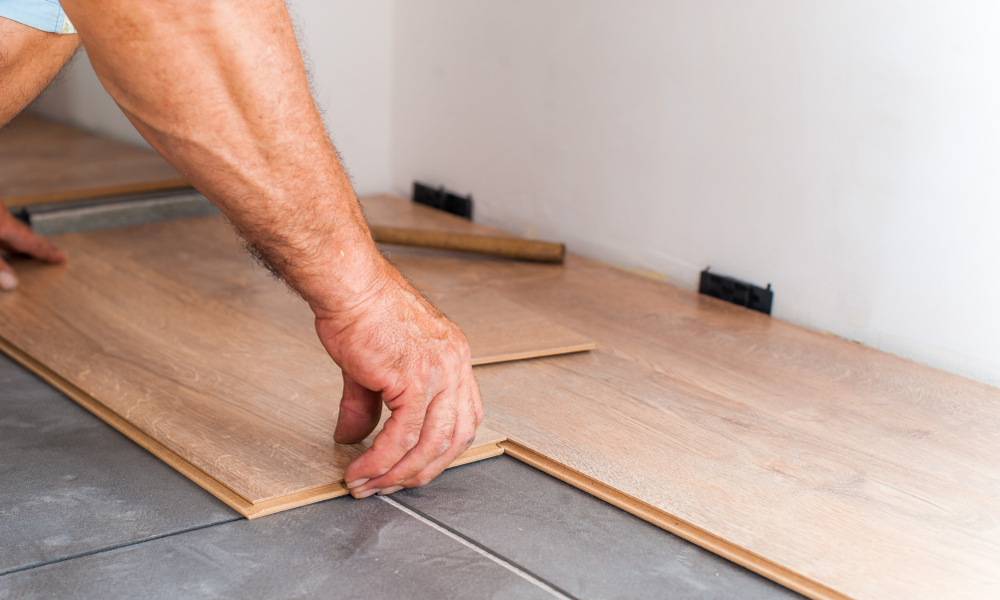
When homeowners in Fargo start planning a flooring project, the conversation almost always begins with aesthetics. Which tile pattern? Which hardwood stain? Which luxury vinyl color coordinates best with the kitchen cabinets? These are valid and enjoyable decisions, but they are also the last decisions that should occupy your attention. Before any of that, there is a foundational question that separates a floor that lasts decades from one that fails within a few years: how flat is your subfloor?
Substrate preparation is the unglamorous backbone of any successful flooring installation. It rarely comes up in showroom conversations, and it almost never appears on mood boards. Yet for homeowners in Fargo, North Dakota, the condition of the subfloor is not just a best practice consideration. It is a regional necessity shaped by the climate, the soil, and the particular way buildings age in the Red River Valley.
What Subfloor Flatness Tolerances Actually Mean for Your Home
The flooring industry operates on specific subfloor flatness tolerances, and understanding them will change how you evaluate any estimate you receive. The most widely referenced standard is 3/16 of an inch over a 10-foot span, or 1/8 of an inch over a 6-foot span. These numbers describe the maximum allowable variation in height across a given distance on the subfloor surface before additional floor leveling work is required.
Why do these tolerances matter so much? Because flooring materials are rigid or semi-rigid systems that expect a consistent plane beneath them. When that plane has dips, humps, or transitions, the installed floor responds. Tile grout cracks. Hardwood planks develop hollow spots that flex and squeak underfoot. Luxury vinyl tiles loosen at the seams. The finished floor telegraphs every flaw hiding beneath it, sometimes immediately and sometimes over the course of a heating season.
For anyone undertaking home renovation in Fargo, this is not a theoretical problem. It is a practical one that shows up in project after project, and it begins long before the first plank or tile is ever unboxed.
Why Fargo Homes Face Unique Subfloor Challenges
The Red River Valley sits atop some of the most expansive clay soils in North America. This glacial lake bed, left behind by ancient Lake Agassiz, is notorious for its ability to absorb and release moisture. The ground swells in wet seasons and contracts in dry ones. Over years and decades, this cyclical movement exerts pressure on foundations, causes slabs to shift, and leads to the kind of irregular settling that creates uneven subfloor conditions throughout a home.
Add to that the dramatic temperature swings that Fargo experiences, where winters can push well below zero and summers can climb into the nineties, and you have a built environment that is constantly expanding and contracting. Wood subfloors absorb humidity changes and respond by cupping, crowning, or developing gaps. Concrete slabs develop cracks and surface variations that worsen over time. By the time a homeowner in Fargo is ready to install new flooring, the subfloor has often endured decades of this stress, and it shows.
This is why substrate preparation in Fargo is not simply about following industry guidelines. It is about accounting for a regional context that places unusual demands on a building’s bones.
The Floor Leveling Process: What Good Preparation Looks Like
Proper floor leveling begins with an honest assessment. A qualified installer will use a long straightedge, typically 6 or 10 feet, to identify high and low spots across the entire subfloor. This is not a quick pass across the room. It is a methodical process of mapping the surface before any corrective work begins.
For wood subfloors, high spots are typically sanded or planed down, while low spots are filled using a floor leveling compound. These compounds, sometimes called self-leveling underlayments, are poured or troweled into depressions and allowed to cure before installation proceeds. For concrete slabs, the same approach applies, though the specific products used differ in formulation.
In cases where the subfloor is severely compromised, the right answer is sometimes to remove and replace sections entirely rather than build up layers of leveling compound. This is more disruptive and more expensive upfront, but it produces a more stable base and reduces the risk of problems down the road.
The goal of all this work is simple: to create a surface that meets the subfloor flatness tolerances required by the specific flooring product being installed. Different products carry different requirements, and a good installer will always reference the manufacturer’s specifications rather than applying a one-size-fits-all standard.
Thin-Set Application and Why It Depends on a Flat Surface
For tile installations, thin-set application is the step that bridges the subfloor and the tile itself. Thin-set mortar bonds the tile to the substrate, and the quality of that bond depends almost entirely on the quality of the surface beneath it. When the substrate is flat and properly prepared, thin-set can be applied in consistent, even ridges using a notched trowel. The back of the tile makes full contact with those ridges, achieving what the industry calls full coverage.
When the substrate is not flat, thin-set application becomes a workaround rather than a bonding process. Installers may be tempted to use thick beds of mortar to bridge low spots or adjust for variations. This approach has limits. It compromises the structural integrity of the installation and can lead to hollow spots beneath the tile, which are prone to cracking under load.
In Fargo, where freeze-thaw cycles can affect even interior spaces near exterior walls, a tile installation that lacks full thin-set coverage is a tile installation that is already living on borrowed time. Proper substrate preparation eliminates this vulnerability before it starts.
How to Talk to Your Contractor About Substrate Preparation
One of the most useful things a homeowner can do before beginning any flooring project is to ask direct questions about the substrate preparation process. A contractor who immediately launches into product selection without discussing the subfloor condition is a contractor worth questioning. A contractor who walks through the space with a straightedge and explains what they find is one who understands where quality actually begins.
Ask how they assess flatness. Ask what products they use for floor leveling and how long those products need to cure before installation. Ask whether their quote includes substrate preparation or whether that will be billed separately if problems are discovered. These are not adversarial questions. They are the questions that distinguish homeowners who get excellent results from those who end up with cracked grout and squeaky planks a year after the project is completed.
For Fargo home renovation projects specifically, it is also worth asking whether the contractor has experience working in the Red River Valley and understands how local soil and climate conditions affect substrate behavior over time.
Conclusion
A beautiful floor starts well below the surface. In Fargo, where the ground itself is in a constant slow conversation with moisture and temperature, that truth carries extra weight. Substrate preparation and floor leveling are not add-ons or optional upgrades. They are the foundation on which every other decision rests. The right subfloor flatness tolerances, applied correctly with proper thin-set application and attention to regional conditions, are what separate a floor that ages gracefully from one that becomes a problem. Before you fall in love with the finish, make sure the foundation deserves it.
Need a Flooring Store Near You?
At Showcase Floors, we take pride in helping homeowners and businesses throughout Fargo, ND and the surrounding 90-mile radius bring their spaces to life with beautiful, high quality flooring and custom tile work. As a trusted family owned flooring store and contractor, our team delivers expert craftsmanship on everything from hardwood, carpet, tile, and vinyl flooring to custom walk-in showers, backsplashes, walls, and fireplaces. We also handle demolition and level prep to make sure every installation starts with a solid foundation, and we are always happy to provide free estimates so you can plan your project with confidence. When you are ready to upgrade your space with flooring and tile solutions you can rely on, reach out to us and let us help you get started today.